Are Staghorn Ferns Epiphytes? What Does That Mean?
Staghorn Ferns are unique and fascinating plants that have become increasingly popular as mounted displays in American homes. Their antler-like fronds make them a striking addition to any indoor garden. But have you ever wondered how they grow in the wild? The answer lies in their classification as epiphytes.
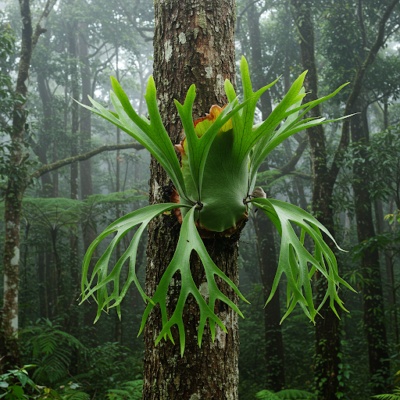
What Does “Epiphyte” Mean?
The term “epiphyte” comes from the Greek words “epi” meaning “upon” and “phyton” meaning “plant.” In botanical terms, an epiphyte is a plant that grows on the surface of another plant, typically a tree, but does not derive its nutrients from the host plant. Epiphytes are also known as “air plants” because they obtain moisture and nutrients from sources other than the soil, such as:
- Air: They can absorb moisture directly from the humidity in the atmosphere.
- Rainwater: Their specialized fronds and root systems are adapted to capture rainwater.
- Nutrient-Rich Debris: They can collect organic matter like falling leaves, dust, and animal droppings that accumulate around them, which then decompose and provide nutrients.
It’s important to note that epiphytes are not parasitic. They use the host plant solely for physical support, to gain better access to sunlight in the forest canopy, and for elevation away from the darker forest floor. They do not penetrate the host plant’s tissues or steal nutrients from it. This harmonious relationship allows both the epiphyte and the host plant to thrive.
How This Affects Staghorn Ferns:
Understanding that Staghorn Ferns are epiphytes is crucial for their care in cultivation. In their natural habitat, you would find them growing on the trunks and branches of trees in tropical and subtropical regions of the world, including Australia, Africa, and Southeast Asia.
Because they don’t grow in soil, Staghorn Ferns have adapted specialized fronds:
- Basal Fronds (Shield Fronds): These are kidney-shaped or rounded fronds that start green and eventually turn brown and papery. Their primary function is to attach the fern to its host and to collect water and nutrients.
- Fertile Fronds (Antler Fronds): These are the forked fronds that resemble deer or elk antlers. They are responsible for spore production (reproduction).
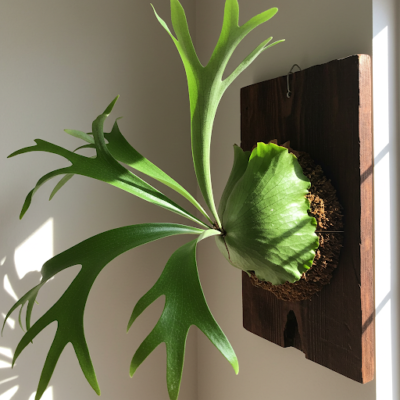
When growing Staghorn Ferns at home, it’s best to mimic their natural epiphytic growth. This is why they are often mounted on wooden boards, cork bark, or placed in open baskets with a very well-draining growing medium like bark or sphagnum moss, rather than planted in traditional soil-filled pots. Providing good air circulation and the right amount of moisture and nutrients will help your Staghorn Fern flourish, just as it would in its natural epiphytic environment.

About the Author — Greenship Garden Team
Greenship Garden is a U.S.-based brand dedicated to modern planter design and home gardening inspiration.
Our editorial team combines years of experience in plant care, garden styling, and sustainable living to help plant lovers create their perfect green spaces.
Through this blog, we share practical gardening tips, planter styling guides, and insights on how to choose the right pots for every home.
🌿 Written and reviewed by the Greenship Garden Team.