Rose Troubles: A Guide to Common Pests and Diseases
It’s heartbreaking to see your beautiful rosebush struggling with yellowing leaves, chewed-up petals, or a strange white coating. While it can be frustrating, most rose problems are easy to diagnose and treat once you know what to look for.
This guide will help you identify the most common rose diseases and pests and provide practical solutions to get your plant back to a healthy state.
Fungal Diseases: The Usual Suspects
Fungal diseases are a rose’s biggest enemy, often caused by high humidity and poor air circulation.
- Black Spot:
- Symptoms: You’ll see small, black spots with yellow halos on the leaves, which then turn entirely yellow and fall off.
- Prevention: Water at the base of the plant in the morning to keep leaves dry. Ensure good airflow by giving your roses enough space.
- Treatment: Remove and discard all infected leaves. Apply a fungicide specifically for roses. Neem oil is an excellent organic option.
- Powdery Mildew:
- Symptoms: A white, powdery coating appears on the leaves, stems, and buds. Leaves may become distorted and stunted.
- Prevention: Good air circulation is key. Plant roses in a sunny spot and prune to an open shape.
- Treatment: A solution of baking soda and water (1 tablespoon baking soda per gallon of water) can be sprayed on the leaves. Horticultural oils or fungicides also work well.
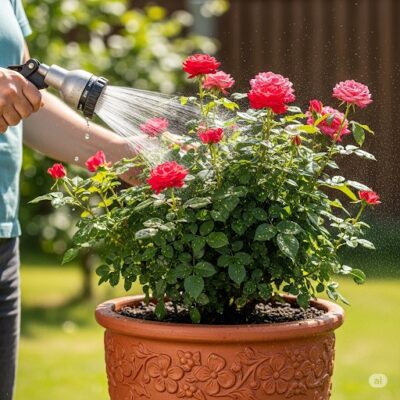
Rose
Common Pests: Tiny Invaders
These small insects can cause big problems by chewing on leaves and buds or sucking out the plant’s vital sap.
- Aphids:
- Symptoms: Tiny, soft-bodied insects (green, black, or red) cluster on new growth and flower buds. You might also notice sticky residue on the leaves.
- Treatment: For a small infestation, a strong spray of water from a hose can knock them off. For larger problems, use an insecticidal soap or Neem oil, making sure to spray the undersides of the leaves.
- Spider Mites:
- Symptoms: Look for fine webbing on the leaves and a speckled, discolored appearance. You may need a magnifying glass to see the tiny mites.
- Treatment: They thrive in hot, dry conditions. A strong spray of water is often effective. For a more thorough treatment, use an insecticidal soap.
- Japanese Beetles:
- Symptoms: These iridescent, copper-and-green beetles eat holes in leaves and skeletonize the foliage, leaving only the veins.
- Treatment: The best method is to hand-pick them off and drop them into a bucket of soapy water. You can also use traps, but be aware they might attract more beetles to your garden.
By regularly inspecting your roses and addressing problems early, you can keep your plants healthy and enjoy a beautiful, pest-free garden.

About the Author — Greenship Garden Team
Greenship Garden is a U.S.-based brand dedicated to modern planter design and home gardening inspiration.
Our editorial team combines years of experience in plant care, garden styling, and sustainable living to help plant lovers create their perfect green spaces.
Through this blog, we share practical gardening tips, planter styling guides, and insights on how to choose the right pots for every home.
🌿 Written and reviewed by the Greenship Garden Team.