Why Drainage Holes Are Absolutely Critical for Agave Planters
Agaves are famous for being tough, resilient desert plants. They are built to withstand scorching sun and long periods of drought. However, they have one major weakness: they cannot tolerate “wet feet.” For a potted agave, this means the drainage hole is the single most important feature of its planter. Without it, your agave’s impressive resilience will be no match for a silent and deadly enemy: root rot.
The Primary Purpose: Preventing Root Rot
Agaves are not adapted to sit in water. Their roots, built to search for moisture deep in dry soil, will quickly suffocate in a waterlogged environment. When a pot lacks a drainage hole, excess water pools at the bottom. This soggy, stagnant environment is the perfect breeding ground for fungal diseases that cause root rot.
Root rot is a fungal infection that attacks a plant’s roots, causing them to turn soft, brown, and mushy. Once it sets in, it’s often irreversible. Proper drainage is the only surefire way to prevent this from happening. A well-placed drainage hole allows all excess water to escape, ensuring the soil remains moist but never soggy.
The Secondary Purpose: Promoting Aeration
A drainage hole doesn’t just let water out; it lets air in. As water drains from the bottom of the pot, it creates a vacuum that pulls fresh, oxygen-rich air into the soil. This process is called aeration, and it’s just as vital as drainage.
An agave’s roots need oxygen to perform essential functions, including absorbing water and nutrients. Without adequate air, the roots will begin to die off, and the plant will slowly decline, showing symptoms like yellowing leaves and a lack of new growth. A properly draining pot provides the constant air circulation that an agave’s root system needs to stay healthy and functional.
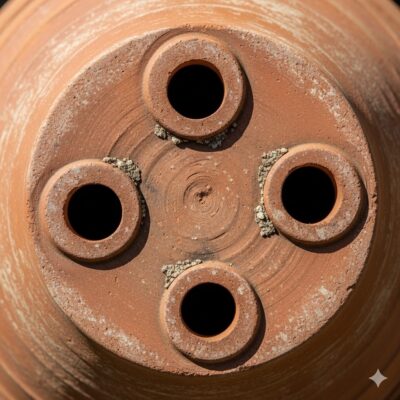
Agave Planters
Practical Tips for Success
- Check Before You Buy: Always inspect the bottom of a pot before you buy it. Never use a pot without drainage holes unless you are willing and able to drill them yourself.
- Use the Right Soil: A drainage hole is most effective when paired with a well-draining soil mixspecifically formulated for cacti and succulents. This type of soil contains materials like sand, pumice, or perlite that prevent compaction and allow water to move through quickly.
- Watering Technique: To ensure your agave gets a deep, thorough watering without the risk of root rot, water until you see water flowing freely from the drainage holes. Then, immediately empty the saucerunderneath the pot to ensure no water is left pooling.
The drainage hole is not just a feature; it’s a lifeline. It ensures both proper drainage and crucial aeration, providing the perfect dry, breathable home that an agave needs to thrive.
About the Author — Greenship Garden Team
Greenship Garden is a U.S.-based brand dedicated to modern planter design and home gardening inspiration.
Our editorial team combines years of experience in plant care, garden styling, and sustainable living to help plant lovers create their perfect green spaces.
Through this blog, we share practical gardening tips, planter styling guides, and insights on how to choose the right pots for every home.
🌿 Written and reviewed by the Greenship Garden Team.