Choosing the Right Geranium Pot: Say Goodbye to Yellow Leaves and Root Rot!
Geraniums (specifically Pelargoniums, the common flowering garden plants) are an American gardening favorite, renowned for their bright colors and easy-going nature. However, nothing brings a gardener’s joy to a halt faster than the dreaded signs of yellowing leaves and mushy stems—classic indicators of root rot and overwatering.
The secret to a thriving, vibrant geranium often comes down to one simple factor you might overlook: the pot. Choosing the right container material, size, and ensuring perfect drainage is crucial for preventing the excess moisture that kills more geraniums than any pest.
The Cornerstone of Health: Drainage Holes
This is the single most important rule for any potted geranium. Your container must have adequate drainage holes.
Pot Material: Breathability is Key
The material of your pot dictates how quickly moisture leaves the soil, directly impacting your watering routine and the risk of root rot.
| Pot Material | Pros | Cons | Best For |
| Terracotta (Unglazed Clay) | Highly Porous: Allows water to evaporate through the walls, making it excellent for gardeners who tend to overwater. Helps keep roots cool. | Dries out faster, requiring more frequent watering in hot weather. Heavy and fragile. | Beginners and those in cooler, less arid climates where overwatering is a concern. |
| Plastic | Lightweight, inexpensive, and durable. Retains moisture longer, reducing watering frequency. | Non-porous: Traps moisture, significantly increasing the risk of root rot if overwatered. Dark colors can heat up roots in direct sun. | Experienced gardeners or those in hot, dry climateswhere rapid drying is a problem. |
| Glazed Ceramic | Highly decorative and retains moisture (similar to plastic). | Non-porous, requiring careful watering. Often heavier than plastic. | Where aesthetics are a priority, but be extra cautious with watering. |
Pro Tip: If you choose plastic or glazed ceramic, consider adding a layer of expanded clay pebbles or clay shards at the bottom of the pot (above the drainage hole) before adding your soil. This simple trick improves aeration and ensures the drainage hole doesn’t get clogged.
Size Matters: Don’t Go Too Big
It’s tempting to plant a small geranium in a huge pot, thinking it gives the plant room to grow. For geraniums, this is a fatal mistake.
- The Danger of a Big Pot: A container that is too large holds an excessive volume of soil, which in turn holds too much water. This water stays in the pot for too long, suffocating the roots and creating a perfect environment for root rot.
- The Geranium Paradox: Geraniums actually prefer to be slightly root-bound (tightly packed in the pot). Being snug encourages them to focus energy on blooming, leading to a more spectacular floral display.
- The Right Sizing:
- When repotting, only choose a new container that is 1 to 2 inches wider in diameter than the plant’s current root ball.
- For example, a geranium purchased in a 4-inch pot should be moved into a 5- or 6-inch pot.
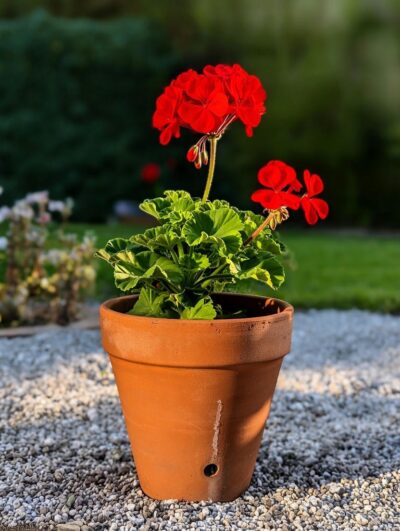
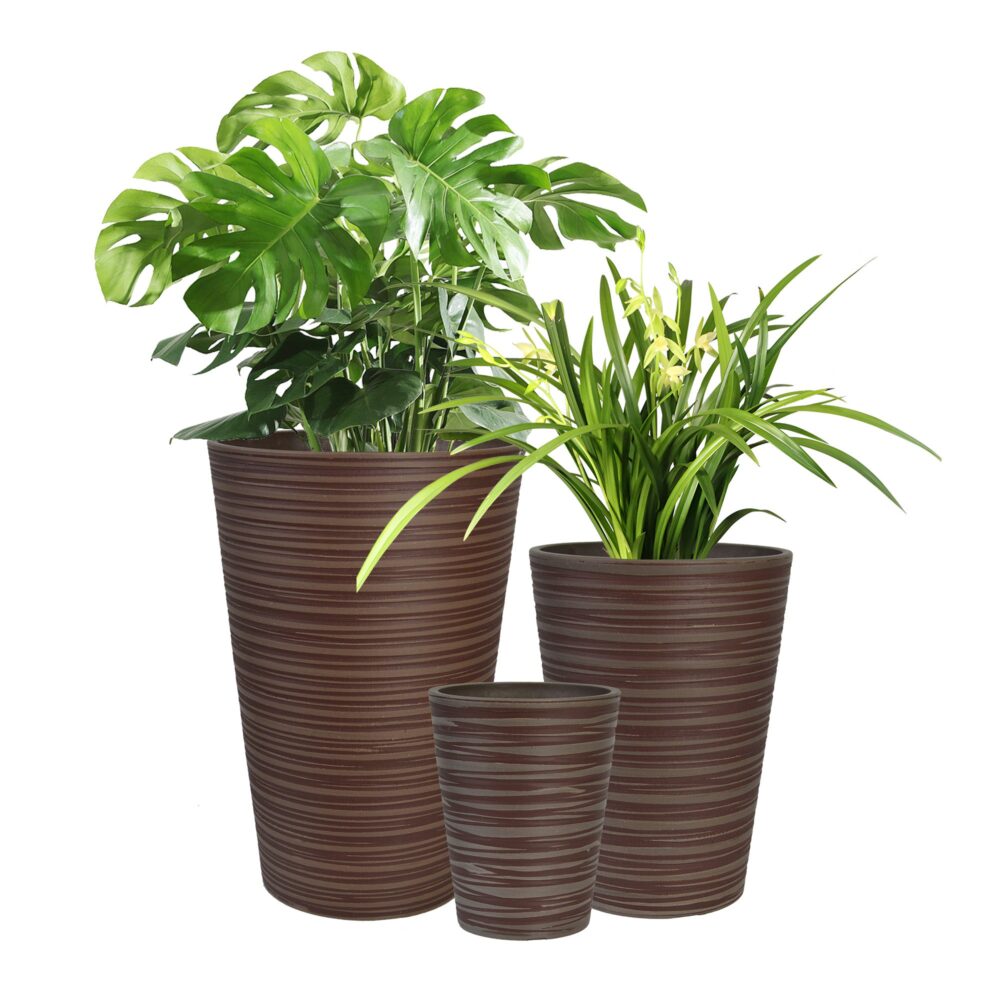
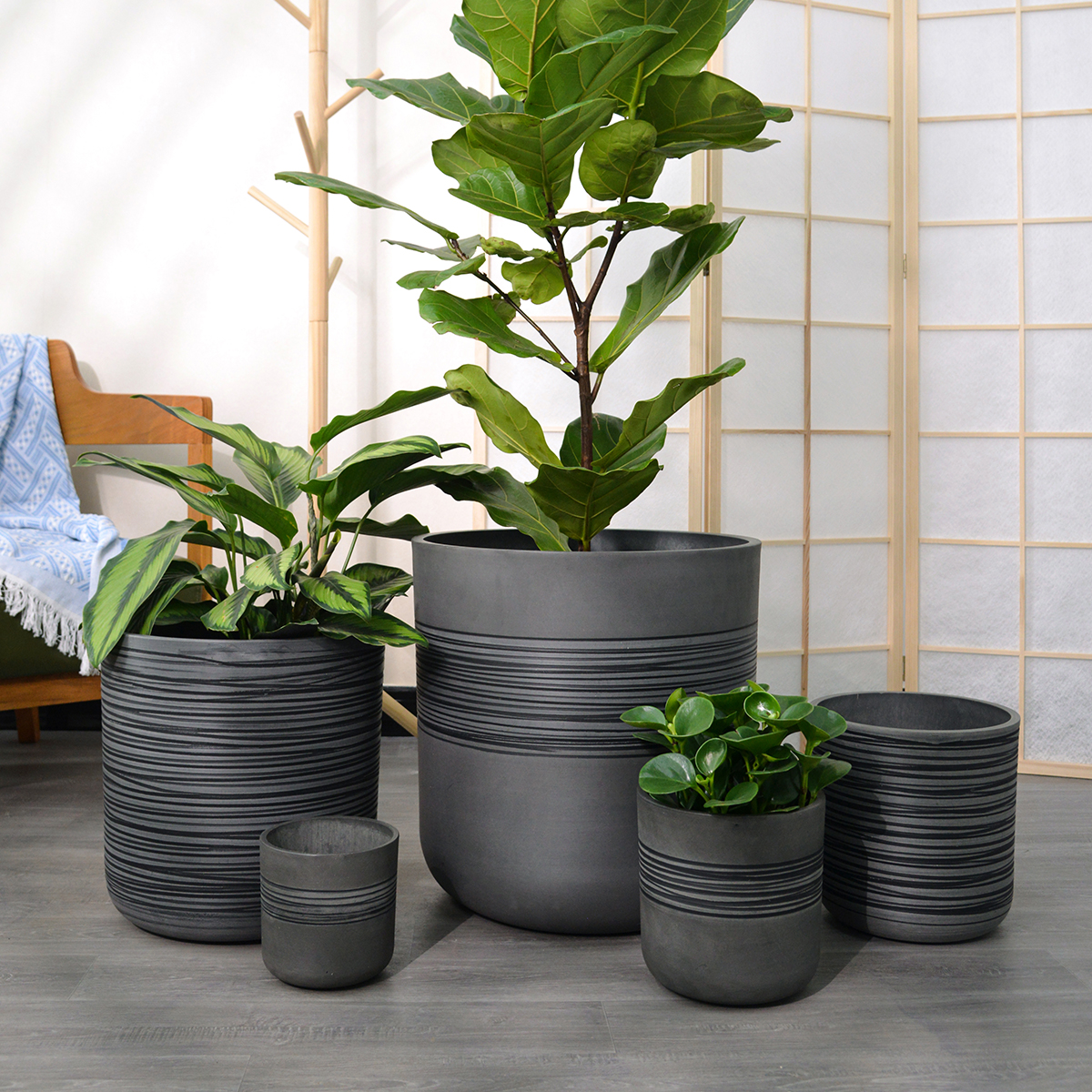
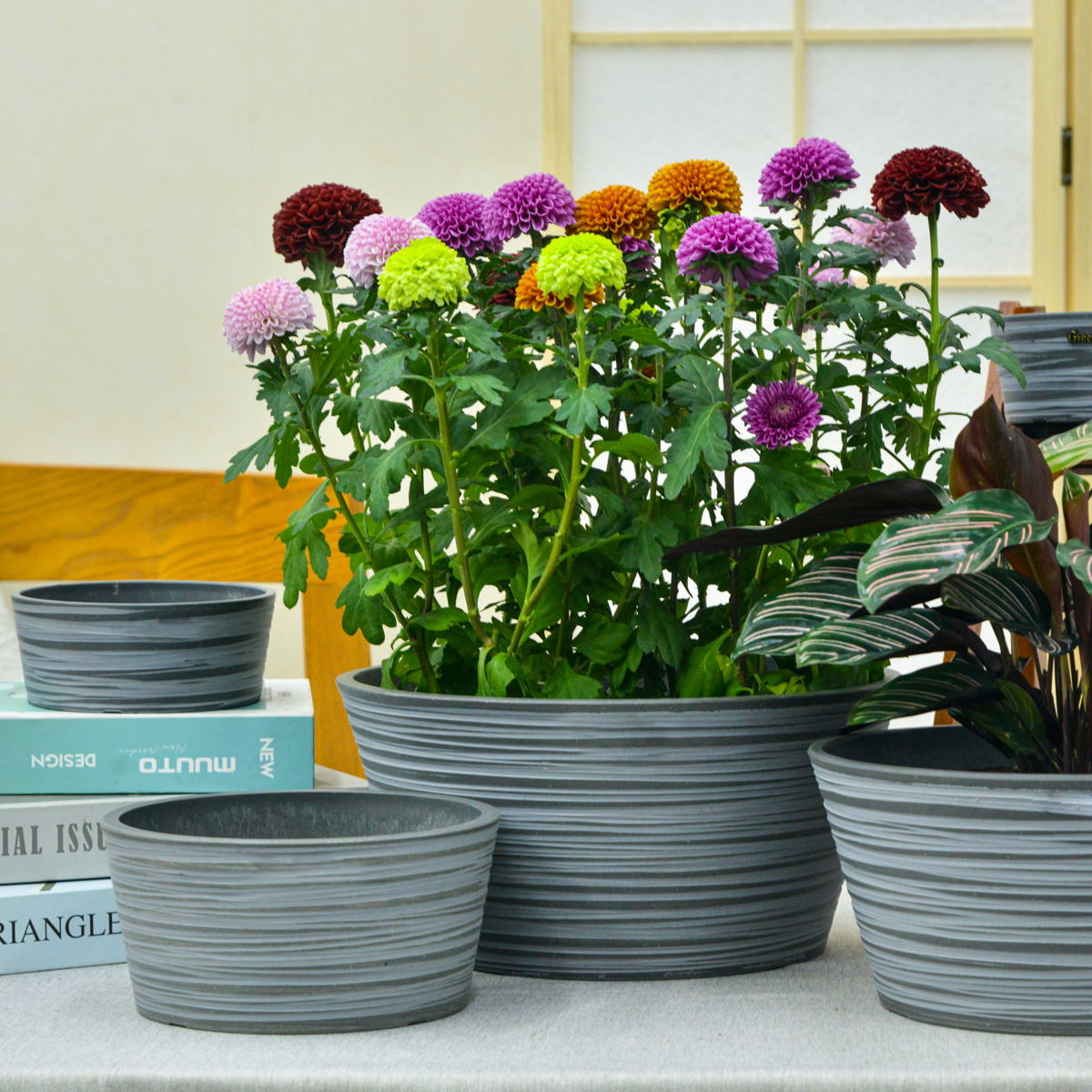
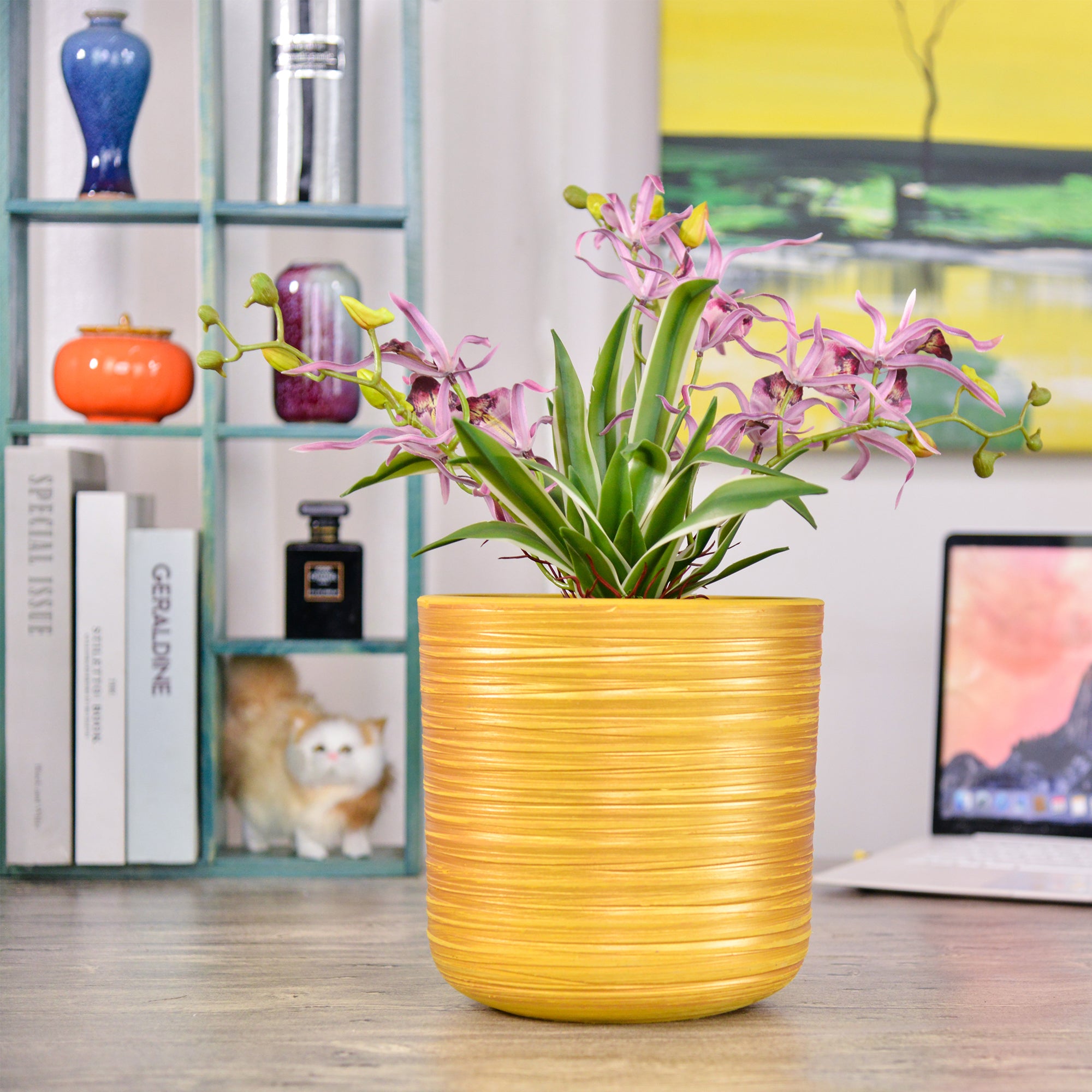
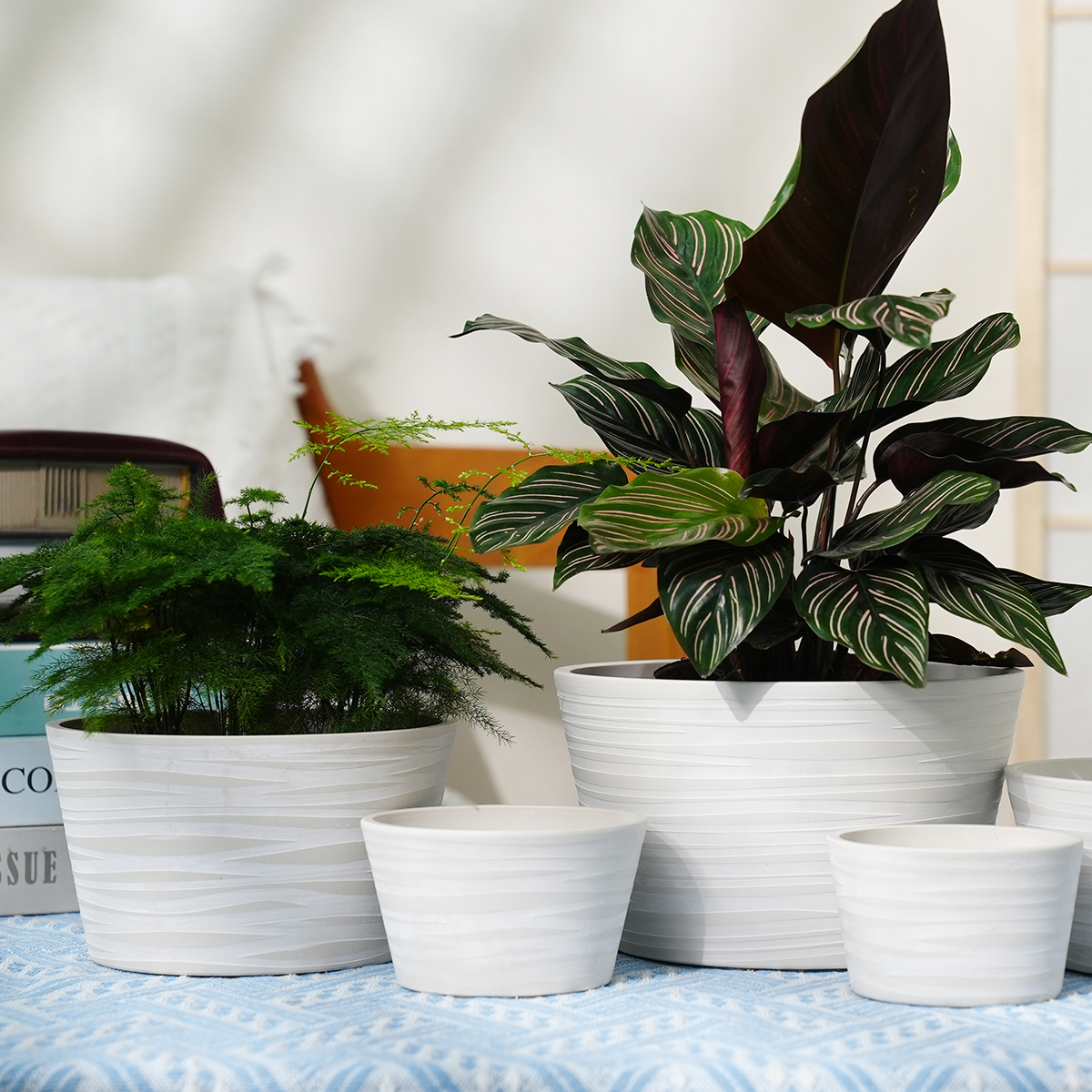
Geranium Pot
The Right Soil for Rot Prevention
The best pot in the world can’t save a geranium if the soil is wrong. Geraniums need a light, airy, and well-draining potting mix.
- What to Avoid: Heavy garden soil or mixes that are too dense and retain water (like those with excessive peat moss or vermiculite).
- The Winning Mix: Use a high-quality, compost-enriched potting mix. To supercharge drainage, mix in a generous amount of an amendment like perlite or coarse builder’s sand.
Final Checklist for Thriving Geraniums
- Drainage Holes: Always check that the holes are open and clear.
- The Finger Test: Only water your geranium when the top one inch of soil is completely dry to the touch. This simple test is the best way to prevent overwatering and the yellowing leaves it causes.
- Pot Material: Use terracotta if you struggle with overwatering; use plastic only if you are confident in your watering discipline or live in a very hot climate.
- Proper Size: Choose a pot that is only slightly larger than the root ball to encourage blooming and prevent excess water retention.
By mastering these pot choices, you give your geraniums the well-drained, slightly cramped conditions they love, ensuring lush green leaves and continuous, brilliant blooms all season long.
About the Author — Greenship Garden Team
Greenship Garden is a U.S.-based brand dedicated to modern planter design and home gardening inspiration.
Our editorial team combines years of experience in plant care, garden styling, and sustainable living to help plant lovers create their perfect green spaces.
Through this blog, we share practical gardening tips, planter styling guides, and insights on how to choose the right pots for every home.
🌿 Written and reviewed by the Greenship Garden Team.