Japandi Planters: How to Create a Calm, Minimalist Space
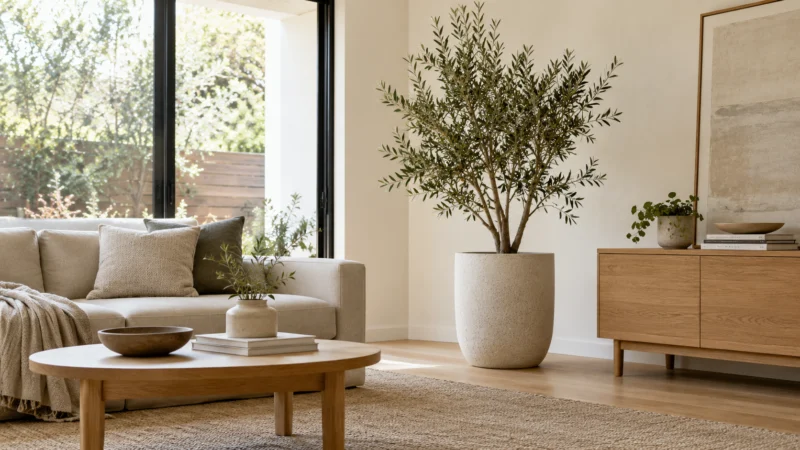
A Japandi room rarely feels empty. It feels intentional.
Blending Japanese restraint with Scandinavian warmth, Japandi interiors favor natural textures, thoughtful proportions, muted colors, and plenty of visual breathing room.
Planters should follow the same principle. Rather than demanding attention, the right planter connects the plant, furniture, and surrounding space.
So what makes a planter feel Japandi?
It comes down to four things: color, shape, texture, and scale.
What Makes a Planter Feel Japandi?
You don’t necessarily need a planter labeled “Japandi.” Instead, look for design characteristics that support the overall aesthetic.
1. Choose Quiet, Natural Colors
Warm white, stone, sand, pale clay, muted brown, soft gray, and charcoal all work naturally in Japandi interiors.
But Japandi doesn’t mean everything has to be beige.
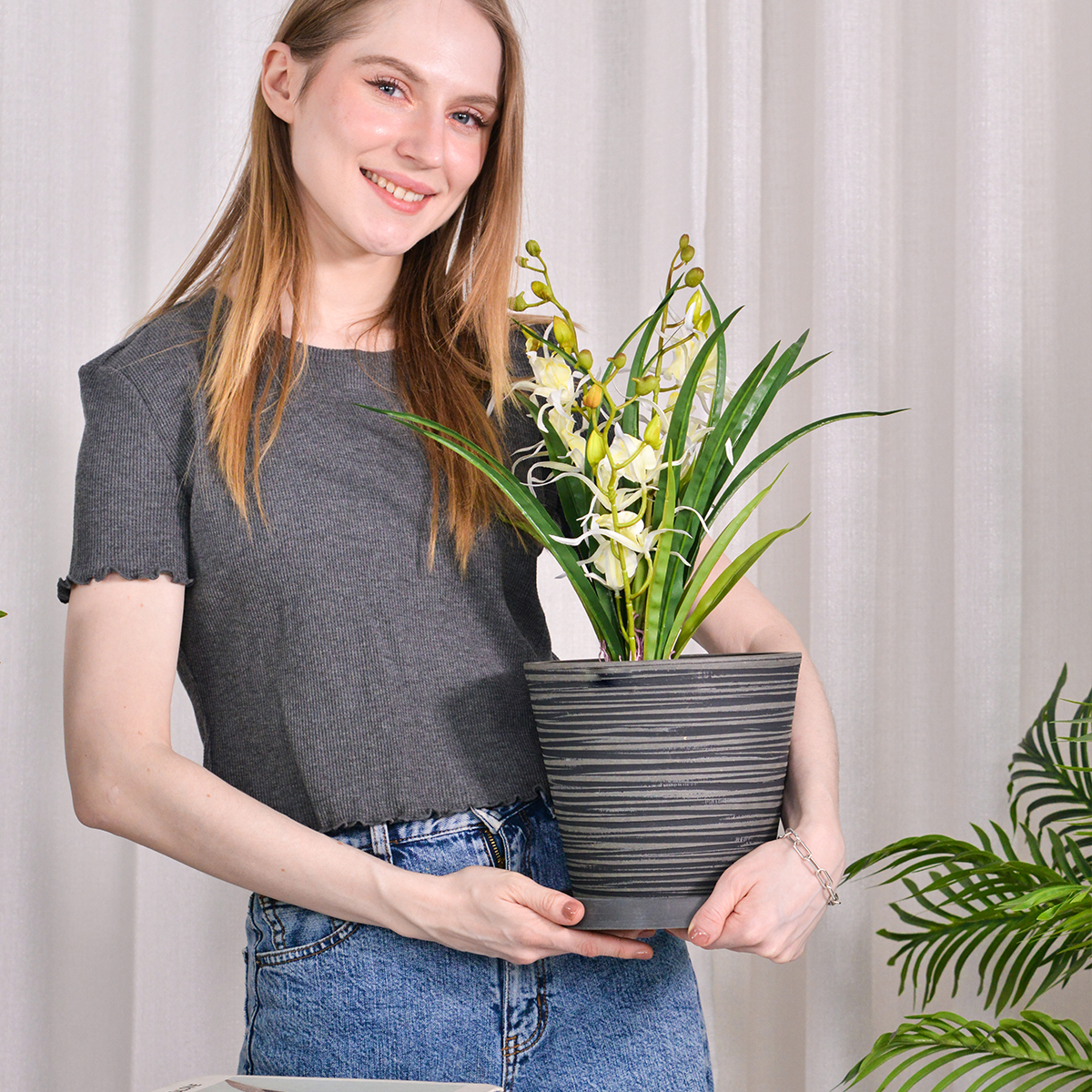
A charcoal planter can create a strong visual anchor against warm wood, cream textiles, and pale walls.
The goal is balance—not perfect color matching.
2. Keep the Silhouette Simple
Simple forms tend to work best.
Clean cylinders, squares, softly tapered containers, and restrained geometric shapes complement minimalist furniture without adding unnecessary visual noise.
A useful rule is:
Let the plant provide the complexity and the planter provide the structure.
3. Look for Natural-Looking Texture
Texture keeps a minimalist room from feeling sterile.
Stone-inspired, clay-inspired, and softly textured surfaces can add depth while maintaining a restrained appearance.
The planter doesn’t necessarily need to be natural stone or ceramic. Modern composite materials can also create a mineral-inspired appearance while remaining practical for everyday use.
4. Leave Visual Breathing Room
More plants don’t automatically create a better room.
One carefully positioned plant in a well-proportioned planter can create more impact than several small pots competing for attention.
Think about the empty space around the planter as part of the composition.
How to Choose the Right Japandi Planter Color
Instead of matching your planter exactly to the walls or furniture, consider how it contributes to the overall palette.
| Room Palette | Planter Color | Visual Effect |
|---|---|---|
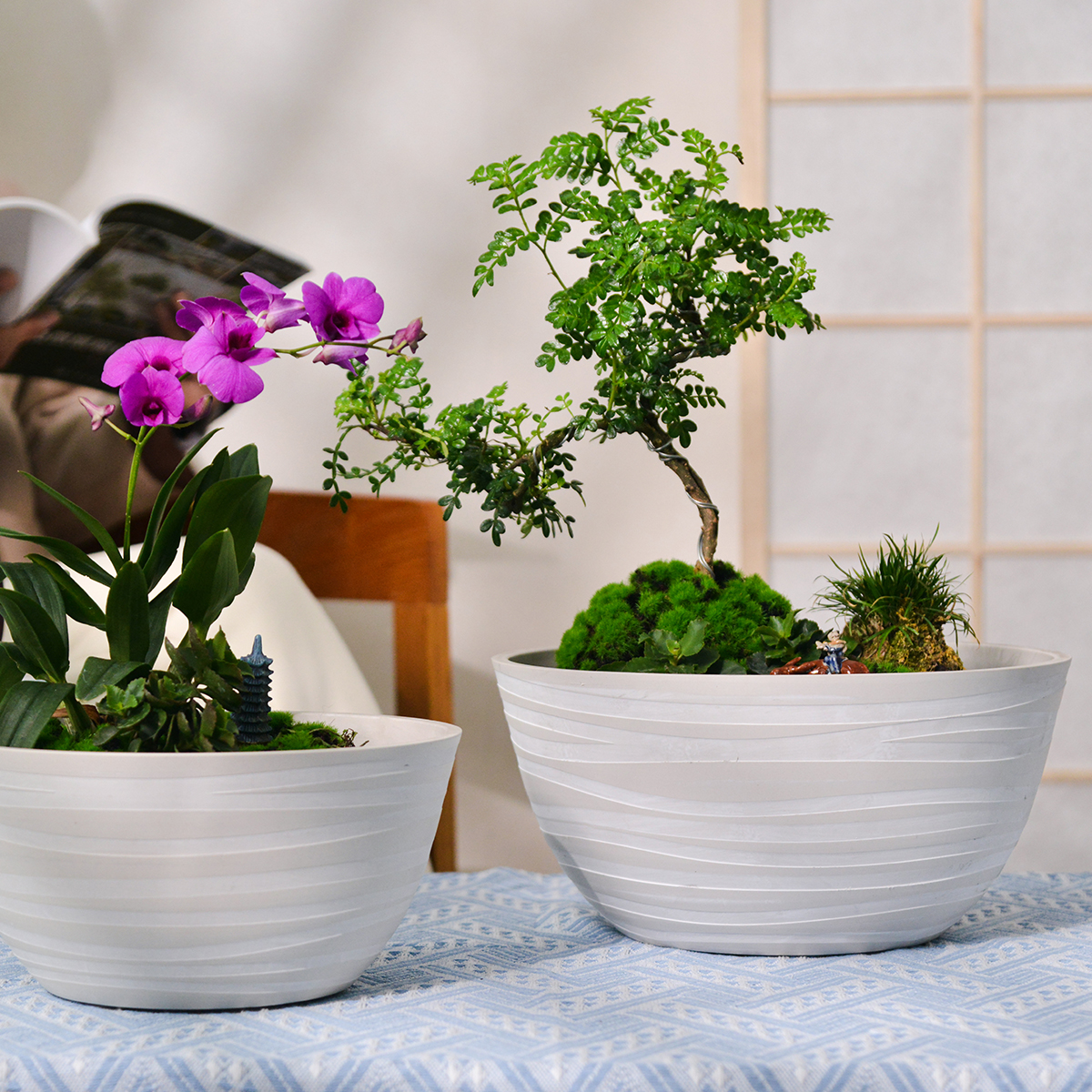
| Warm white + light oak | Stone or sand | Soft and cohesive |
| Beige + walnut | Warm white | Gentle contrast |
| White + black accents | Charcoal | Strong visual anchor |
| Gray + natural wood | Pale clay | Adds warmth |
| Dark wood + cream | Off-white | Creates balance |
Warm mineral tones work especially well with Scandinavian-inspired light woods.
Darker planters can also be effective. A charcoal planter paired with sculptural green foliage introduces contrast without adding unnecessary decoration.
Small vs. Large Japandi Planters
In minimalist interiors, scale often matters more than quantity.
Small Planters
Small planters work well on shelves, desks, side tables, kitchen surfaces, and window ledges.
Rather than crowding several small pots together, try one or two well-spaced planters.
Medium Planters
Medium planters are useful beside a reading chair, console, bedroom dresser, or hallway bench.
Leave enough surrounding space for the planter’s silhouette to remain visible.
Large Planters
Large planters can become architectural elements in living rooms, entryways, stair landings, and open-plan spaces.
Instead of filling an empty corner with multiple decorative objects, one appropriately scaled planter and plant may be enough.
Best Plants for Japandi Planters
Plant selection affects the overall visual language just as much as the planter.
Olive Tree
The delicate foliage and airy branching structure of an olive tree pairs naturally with stone, warm white, and clay-inspired planters.
Ficus
A ficus creates a stronger vertical presence and works particularly well in a simple floor planter with enough surrounding space.
Snake Plant
Upright leaves create clean vertical lines that complement geometric planters and modern furniture, especially in narrower spaces.
Bird of Paradise
Broad leaves add organic movement to larger rooms. Because the plant already has a strong visual presence, keep the planter itself restrained.
The goal isn’t to find plants officially labeled “Japandi.” Look for natural silhouettes that complement the proportions of your room.
5 Common Mistakes When Styling Japandi Planters
1. Using Too Many Small Pots
A large collection of small plants can quickly create visual clutter.
Reducing the number of containers often makes each plant feel more intentional.
2. Making Everything the Same Color
A completely beige room can lose depth.
Introduce controlled contrast through foliage, wood tones, textiles, or a darker planter. Minimalism doesn’t require eliminating contrast.
3. Choosing an Overly Glossy Finish
Highly reflective surfaces can feel disconnected from the natural materials associated with Japandi interiors.
Matte and subtly textured finishes are usually easier to integrate.
4. Ignoring Scale
A large plant in a planter that looks too small can feel top-heavy, while a tiny plant inside an oversized container can look disconnected.
Consider the plant, planter, furniture, and surrounding space as one composition.
5. Decorating Around the Planter Too Much
You don’t need a basket, sculpture, stack of books, lamp, and decorative tray beside every plant.
Sometimes the plant and planter are enough.
Negative space is part of the design.
Creating a Japandi Look with GreenShip Planters
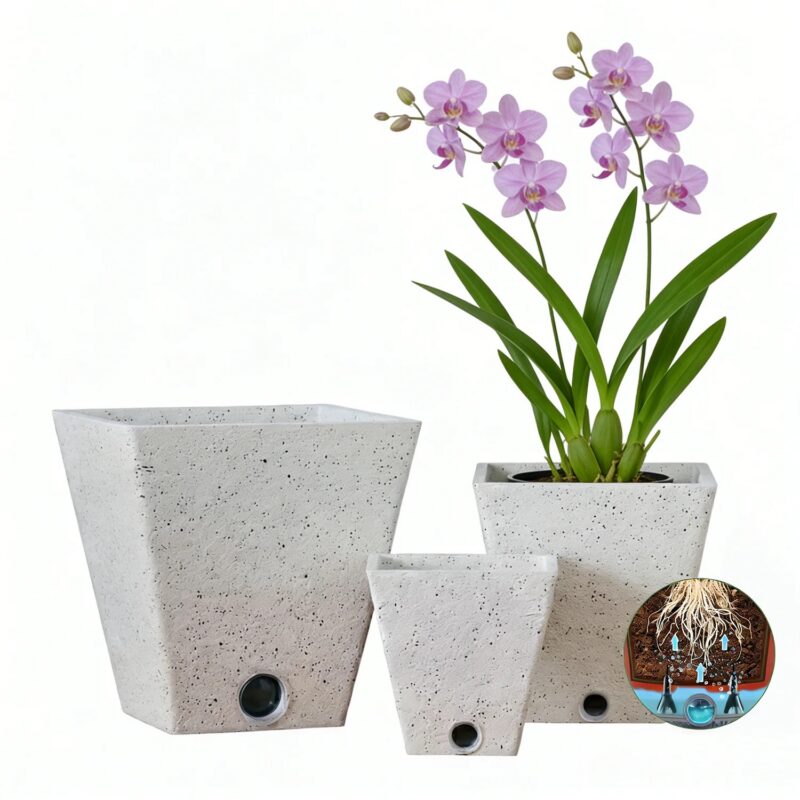
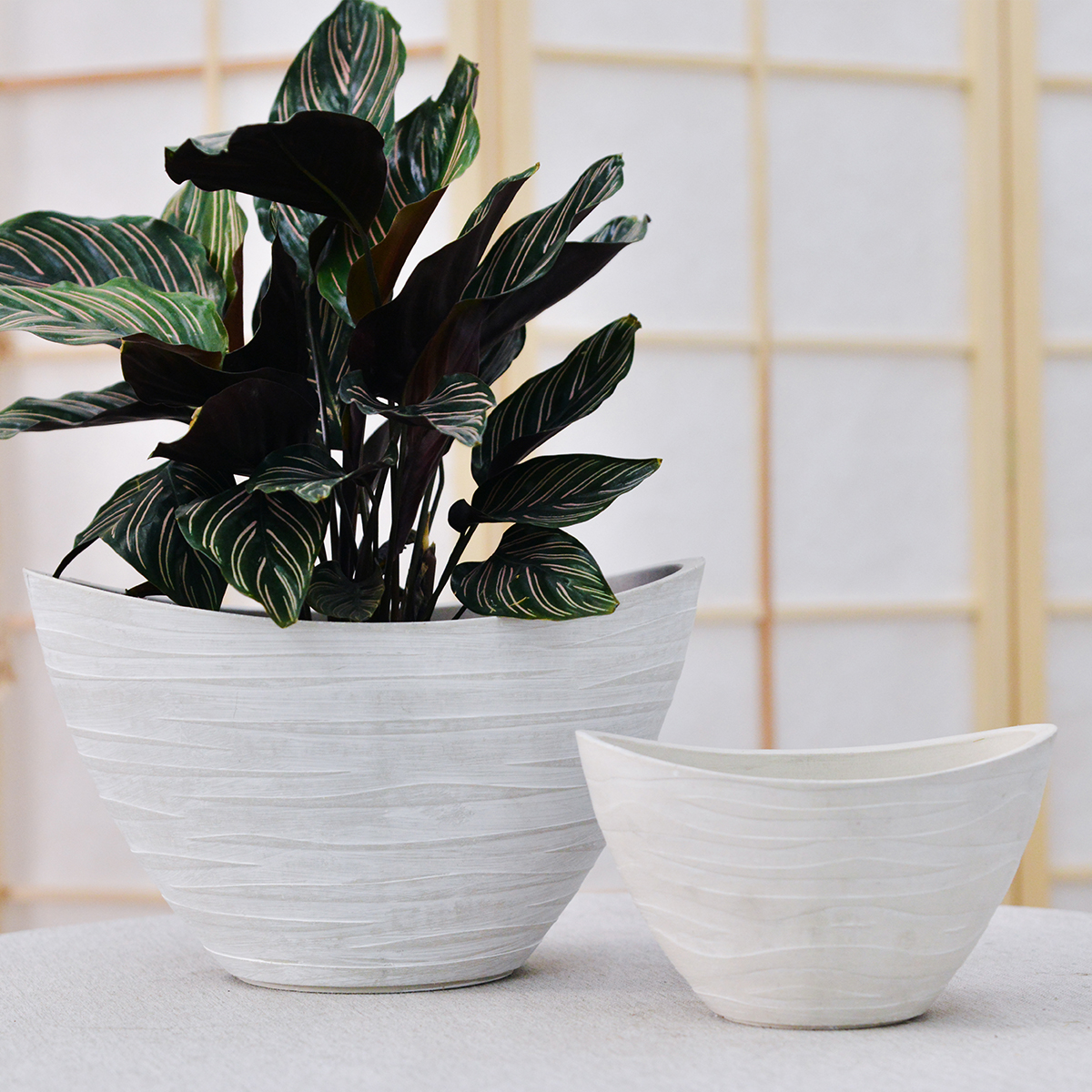
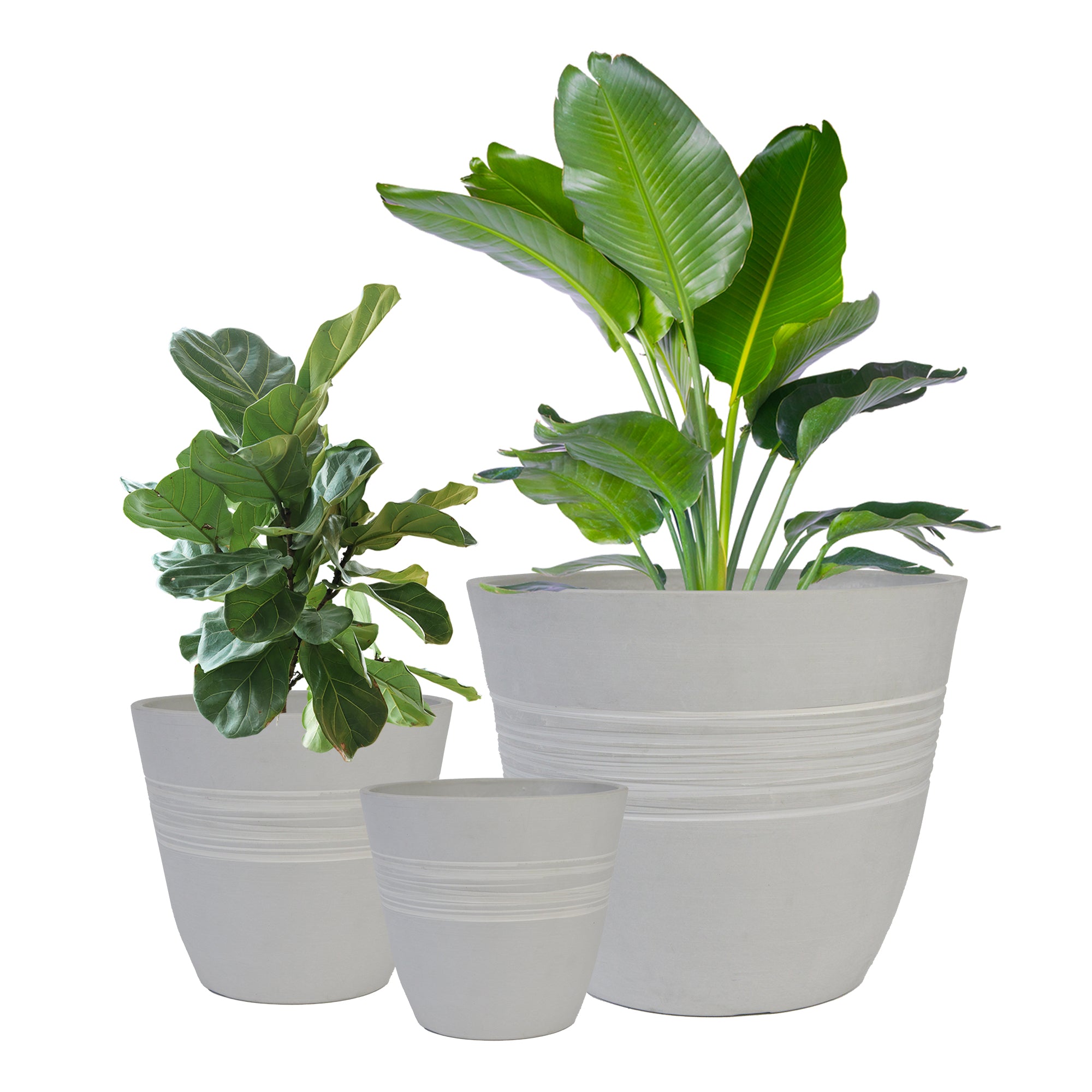
Several GreenShip planter styles can fit naturally into a Japandi-inspired space through restrained shapes, neutral finishes, and stone-inspired textures.
Neutral Self-Watering Planters
GreenShip self-watering planters in finishes such as WhiteStone, PaleClay, and Chocolate can work well with smaller indoor plants.
Their understated colors pair easily with natural wood, neutral walls, and simple shelving.
Tall Planters for Architectural Greenery
A tall square planter can create a stronger focal point in an entryway, living room, or covered outdoor transition area.
Pair it with a vertically structured plant and allow enough empty space around the arrangement.
A Low-Maintenance Option
For low-light areas or spaces where regular plant care is difficult, a realistic artificial snake plant can provide clean vertical greenery without additional watering requirements.
The same principle still applies: keep the surrounding arrangement simple.
A Simple Way to Build the Look
If you’re unsure where to begin, use this three-step approach:
Start with the room.
Identify its dominant colors and materials.
Choose the plant.
Decide whether the space needs height, broad foliage, or a compact accent.
Choose the planter last.
Select a shape, scale, and finish that connects the plant to the room without competing with either.
Frequently Asked Questions
What colors are best for Japandi planters?
Warm white, stone, sand, pale clay, muted brown, soft gray, and charcoal can all work well. Choose according to the surrounding materials rather than relying on one universal palette.
Are black planters suitable for Japandi interiors?
Yes. Black or charcoal planters can create controlled contrast, particularly when paired with natural wood, neutral textiles, and green foliage.
Are large planters good for minimalist interiors?
Yes, when properly scaled. One large planter can sometimes create a calmer composition than several smaller containers.
Do Japandi planters need to be ceramic?
No. Color, texture, shape, and proportion are more important than using one specific material. A restrained composite planter can work just as effectively when it complements the room.
Final Thoughts
Creating a Japandi-inspired space isn’t about filling your home with objects labeled “Japandi.”
It’s about restraint.
Choose fewer planters. Pay attention to proportion. Use quiet colors and natural-looking textures. Give plants enough space to become part of the architecture of the room.
Most importantly, don’t try to make everything match.
A calm interior comes from balance—not uniformity.
Explore GreenShip planters to find understated designs for modern indoor and outdoor spaces.
About the Author — Greenship Garden Team
Greenship Garden is a U.S.-based brand dedicated to modern planter design and home gardening inspiration.
Our editorial team combines years of experience in plant care, garden styling, and sustainable living to help plant lovers create their perfect green spaces.
Through this blog, we share practical gardening tips, planter styling guides, and insights on how to choose the right pots for every home.
🌿 Written and reviewed by the Greenship Garden Team.